LEAFY SEA DRAGON
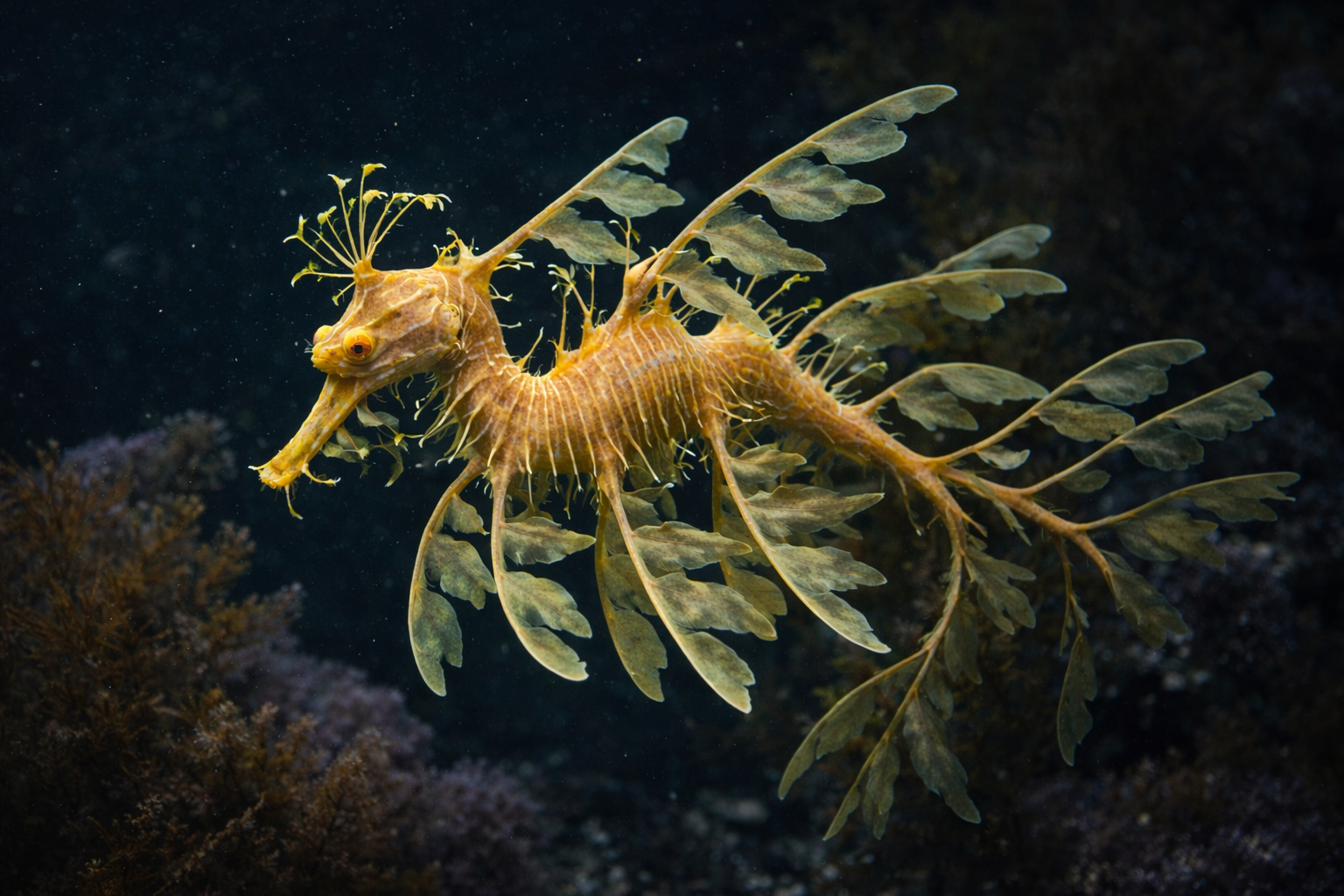
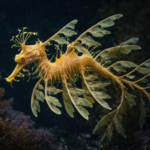
The leafy sea dragon is a unique marine fish found along the southern and western coasts of Australia. It is famous for its leaf-like appendages that help it blend perfectly with seaweed and kelp, protecting it from predators. Despite its seaweed appearance, it is actually related to seahorses and pipefish. Leafy sea dragons move slowly through the water using small, almost invisible fins and feed mainly on tiny crustaceans like mysid shrimp. They are delicate creatures and are protected by law due to habitat loss and environmental threats.
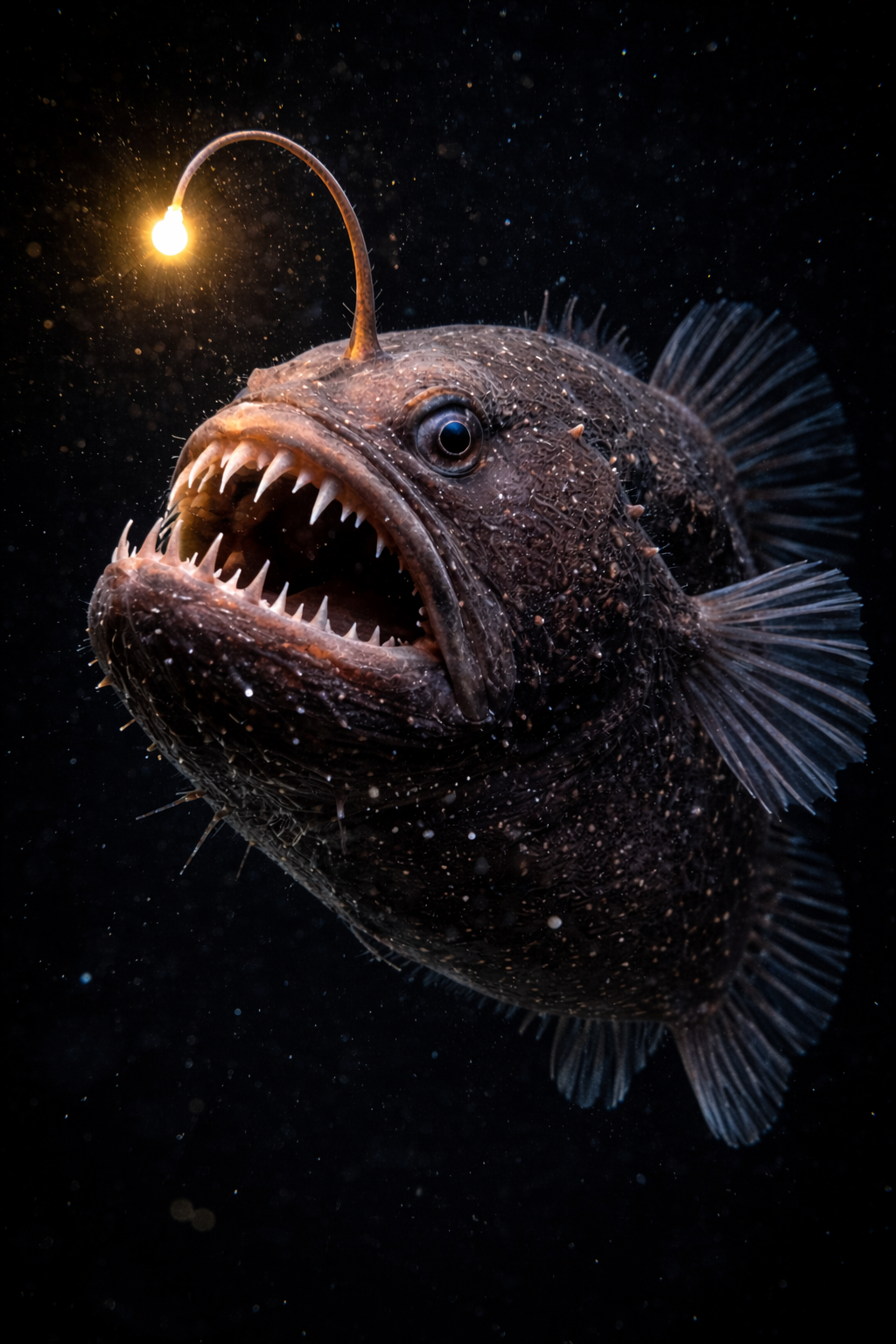
The Fangtooth fish is a deep-sea predator known for its extremely large, sharp teeth and fierce appearance. It lives in the dark waters of the ocean at depths of up to 5,000 meters, where sunlight cannot reach. Despite its scary look, it is relatively small, usually growing only about 15–18 cm long. The fangtooth uses its huge teeth to grab and hold slippery prey like small fish and crustaceans. Its dark body helps it blend into the deep ocean, making it a powerful hunter in one of the most extreme environments on Earth.
FRILLED SHARK
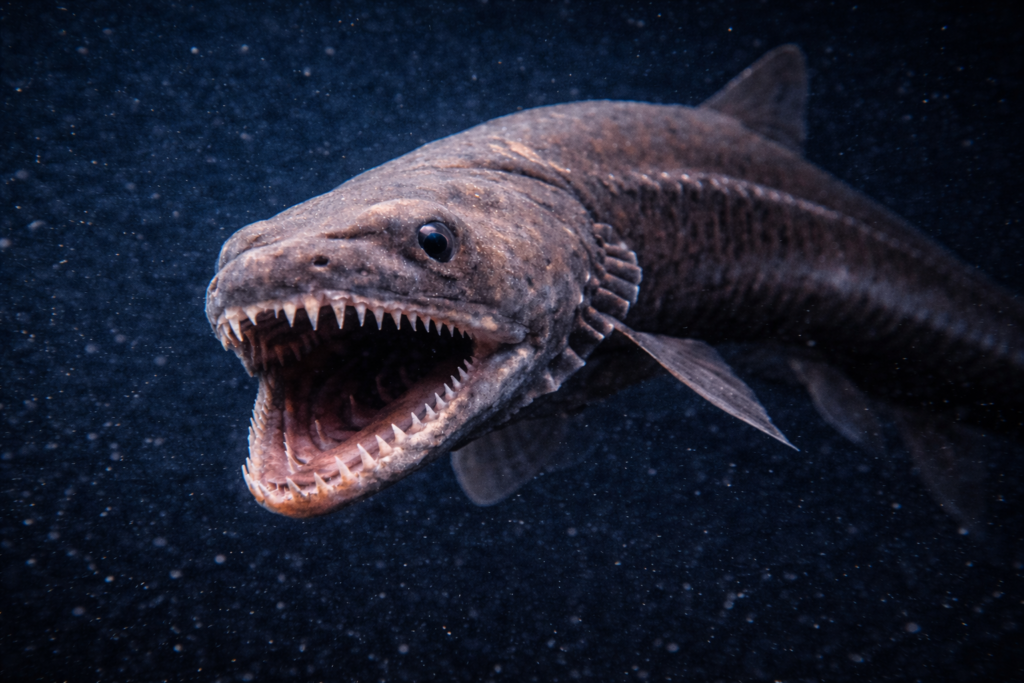
The Frilled Shark (Chlamydoselachus anguineus) is a rare deep-sea shark often called a “living fossil” because its body has changed very little over millions of years. It has a long, eel-like shape and can grow up to about 1.5 to 2 meters in length. Its dark brown or gray color helps it blend into the deep ocean. One of its most noticeable features is the six frilled gill slits around its neck, which give the shark its name.
This shark usually lives at depths between 200 and 1,500 meters in the Atlantic and Pacific Oceans. It has around 300 sharp, needle-like teeth arranged in rows, designed to grip slippery prey like squid and fish. Unlike fast-swimming sharks, the frilled shark moves slowly and captures prey by lunging forward and swallowing it whole. Because it lives so deep underwater, it is rarely seen, making it one of the ocean’s most mysterious species.
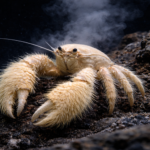
YETI CRAB
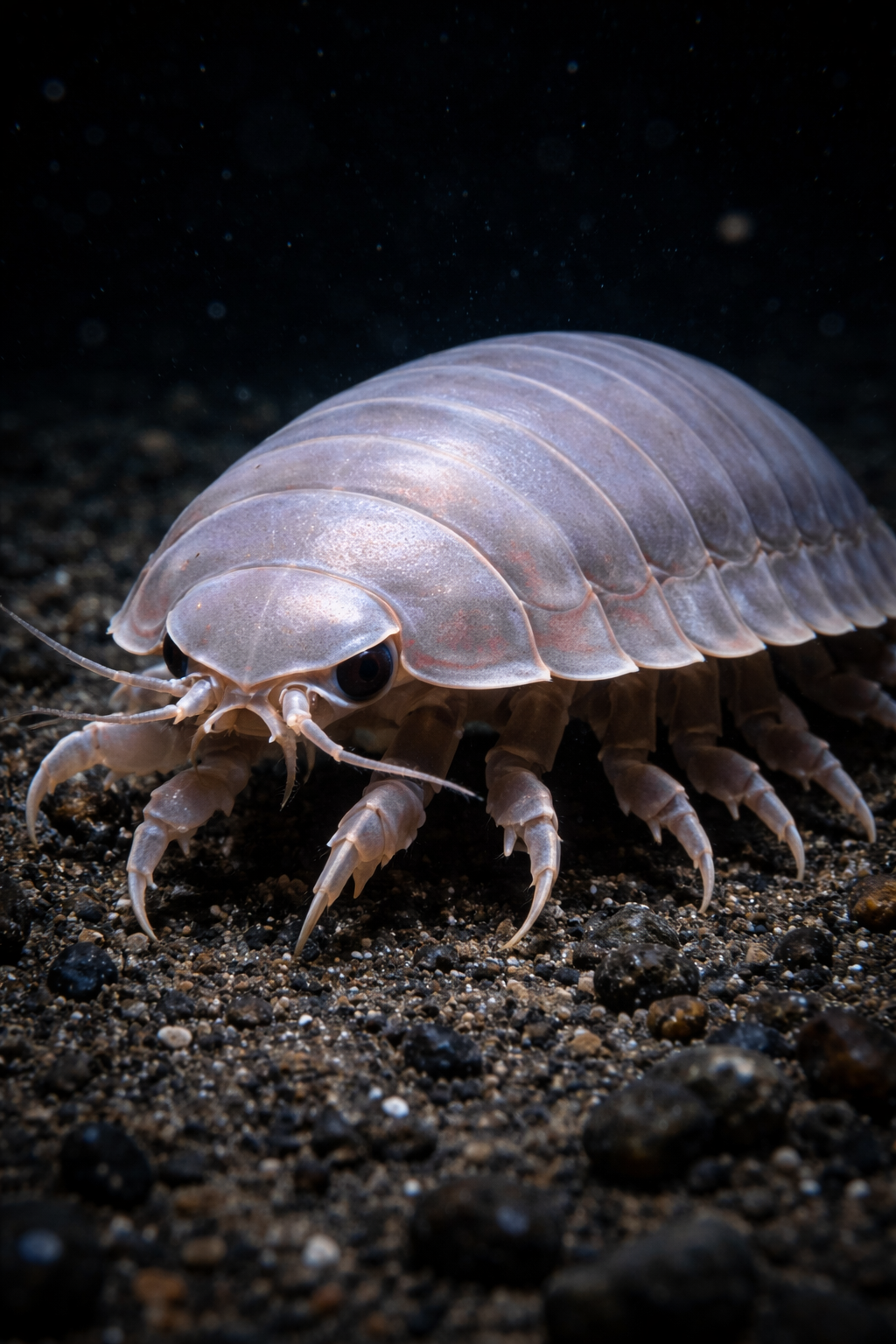
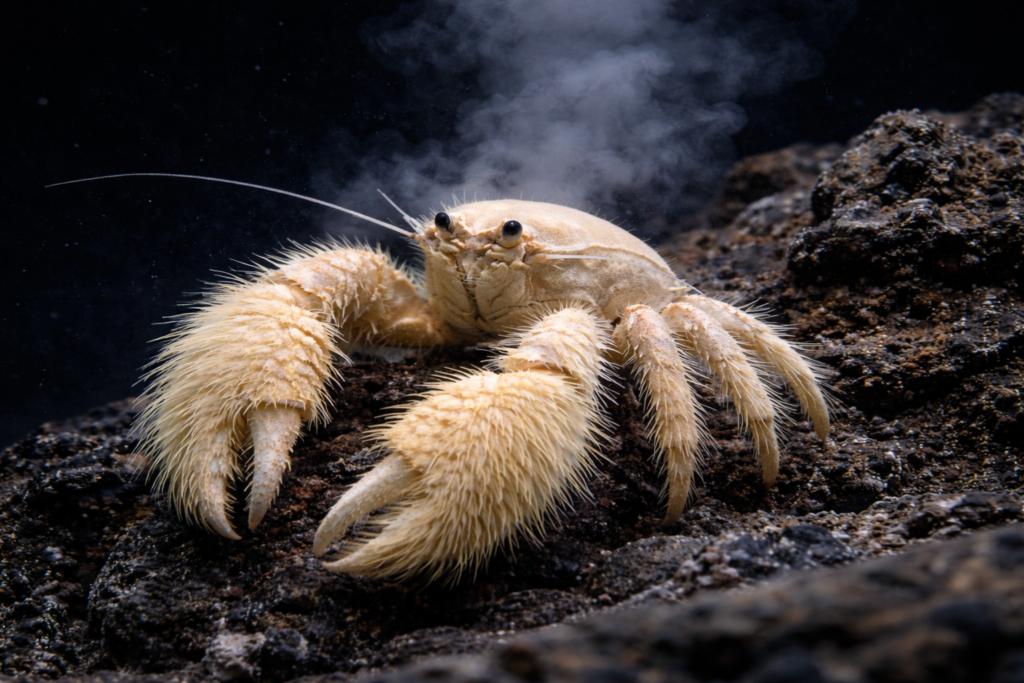
The Yeti crab (Kiwa hirsuta) is a deep-sea crustacean discovered in 2005 near hydrothermal vents in the Pacific Ocean. It lives at depths of around 2,000 meters, where sunlight cannot reach and conditions are extreme. The crab has a pale, almost white body and long claws covered in hair-like filaments, which give it its “yeti” nickname.
Instead of hunting like most crabs, the Yeti crab depends on bacteria that grow on its hairy claws. It waves its arms through mineral-rich vent water to help the bacteria grow, then feeds on them. With very small eyes and limited vision, it relies more on touch and chemical sensing to survive in the dark, high-pressure environment of the deep ocean.
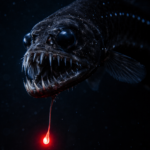
BLACK DRAGONFISH
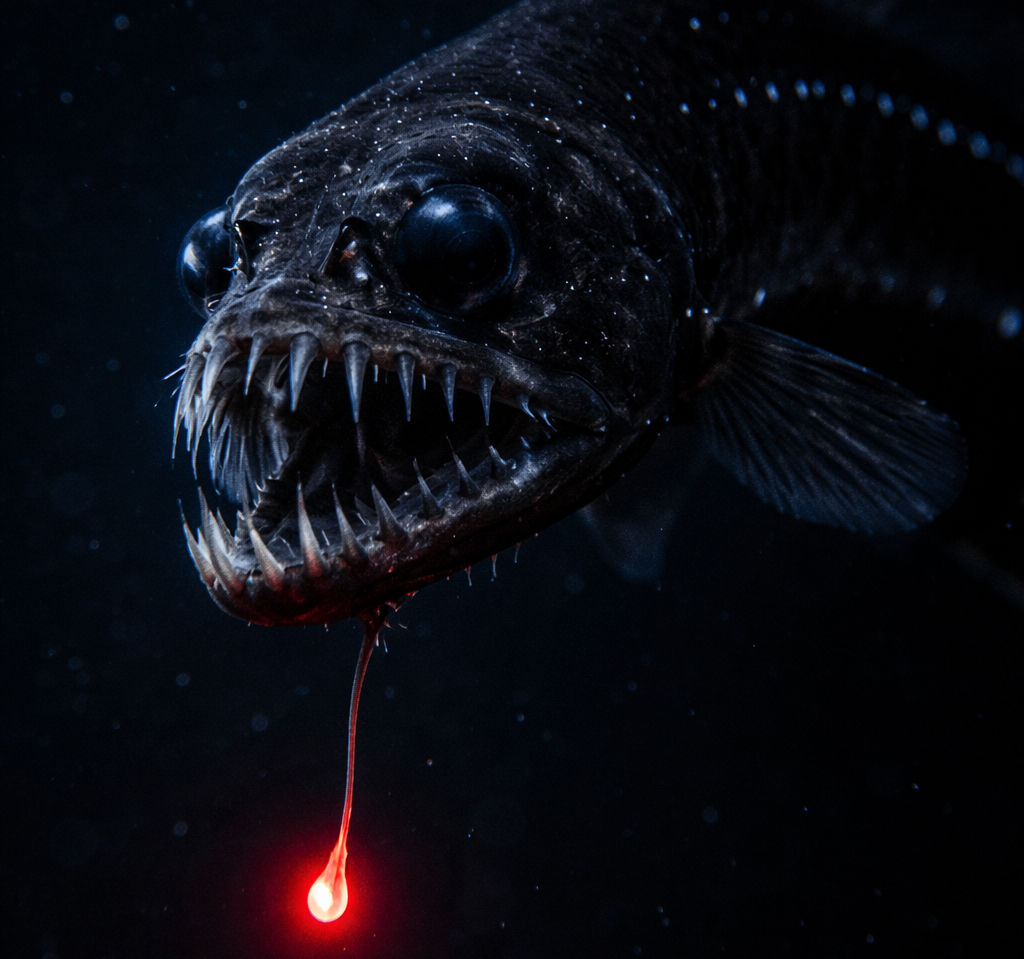
The Black Dragonfish (Idiacanthus atlanticus) is a deep-sea predator known for its long, slender body and sharp, fang-like teeth. It usually lives at depths of 200 to 2,000 meters, where sunlight cannot reach. Its dark black color helps it stay hidden in the deep ocean.
One of its most unique features is its ability to produce bioluminescent light. It has light-producing organs along its body and a small glowing barbel (a thin whisker-like structure) under its chin, which it uses to attract prey. Unlike many deep-sea fish, the Black Dragonfish can see red light, allowing it to hunt using a light color that most other deep-sea creatures cannot detect.
Females are much larger and more fearsome-looking than males. Male Black Dragonfish are smaller, do not have functional teeth, and live much shorter lives. They mainly exist to reproduce.
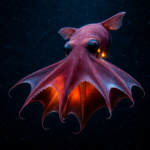
VAMPIRE SQUID
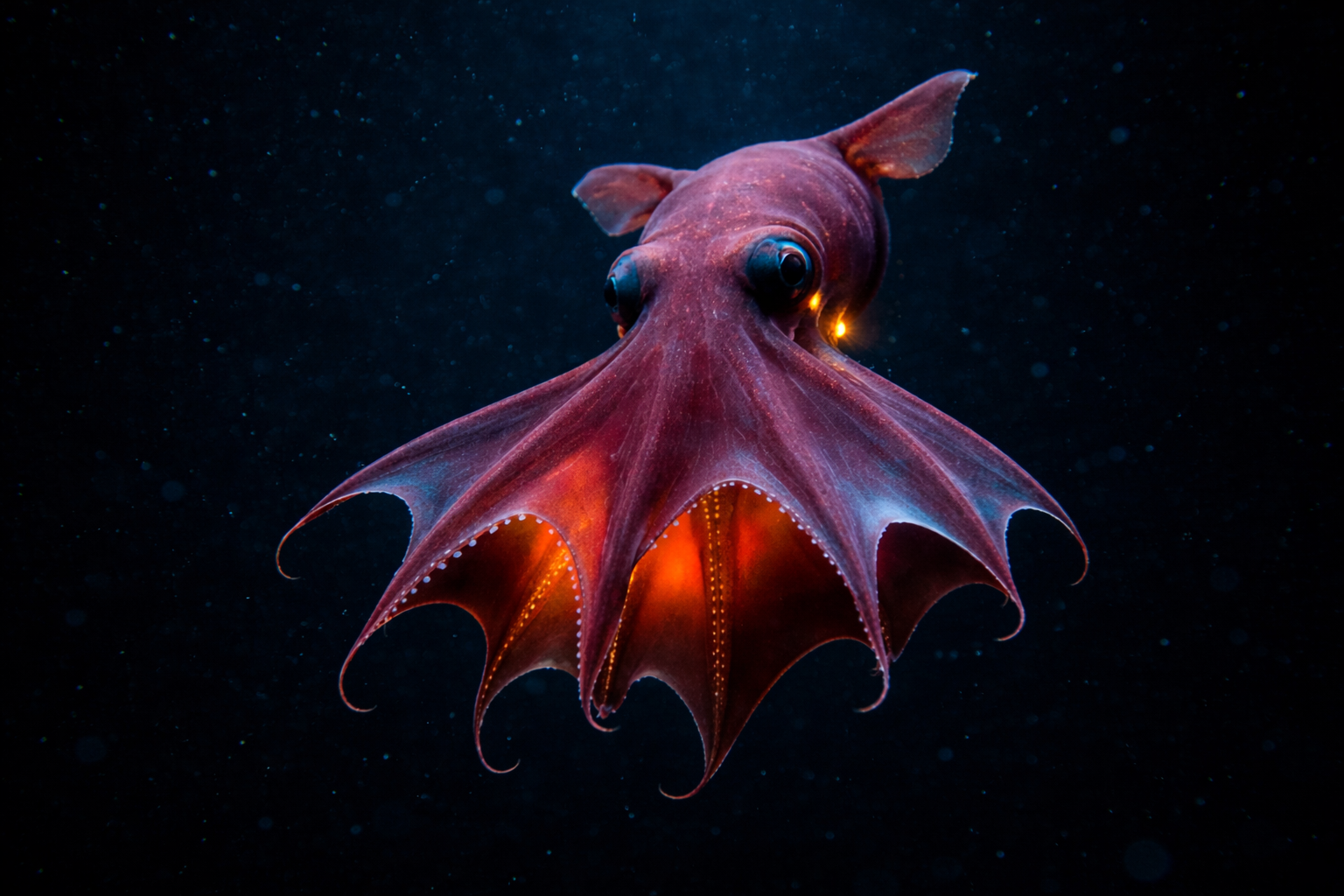
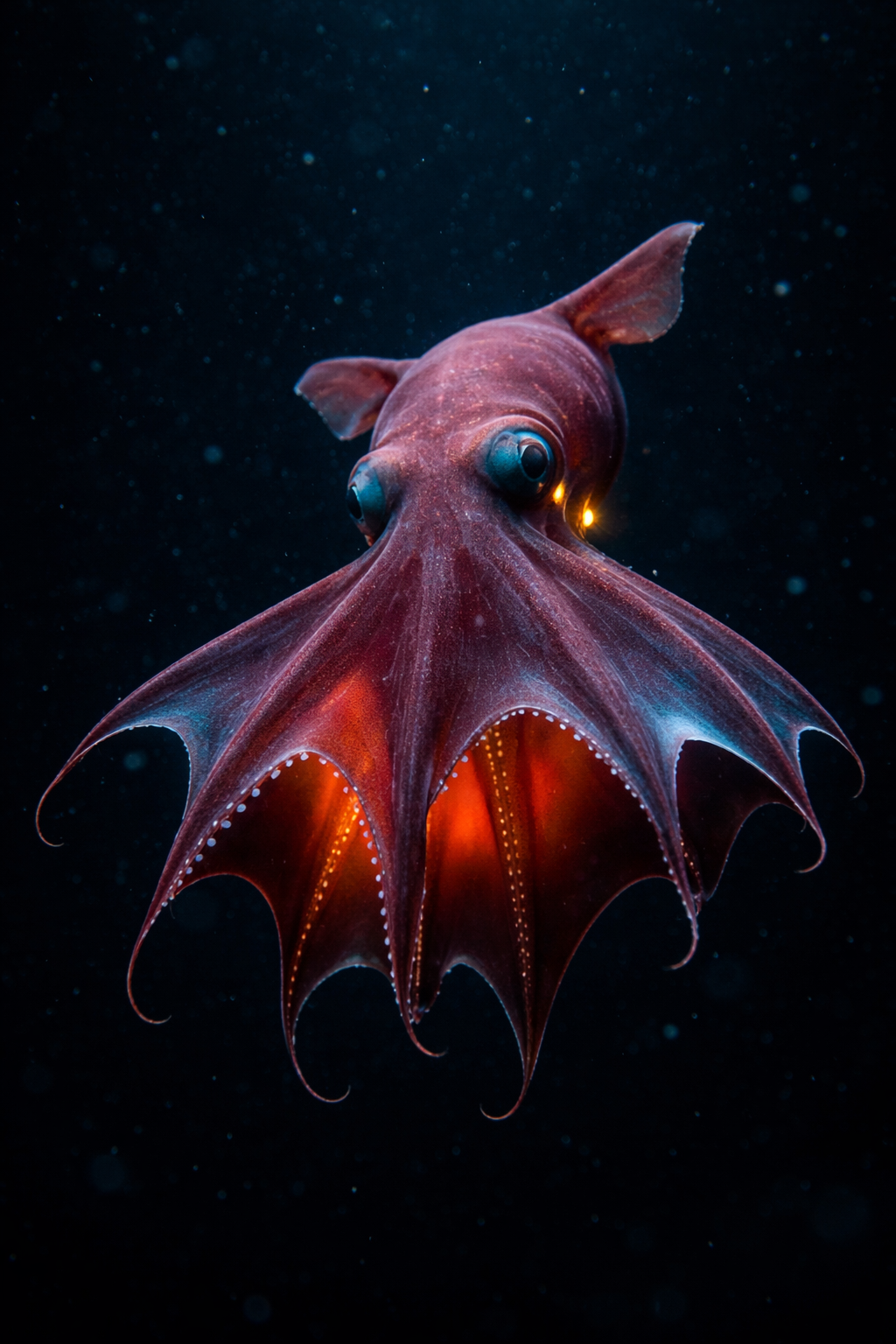
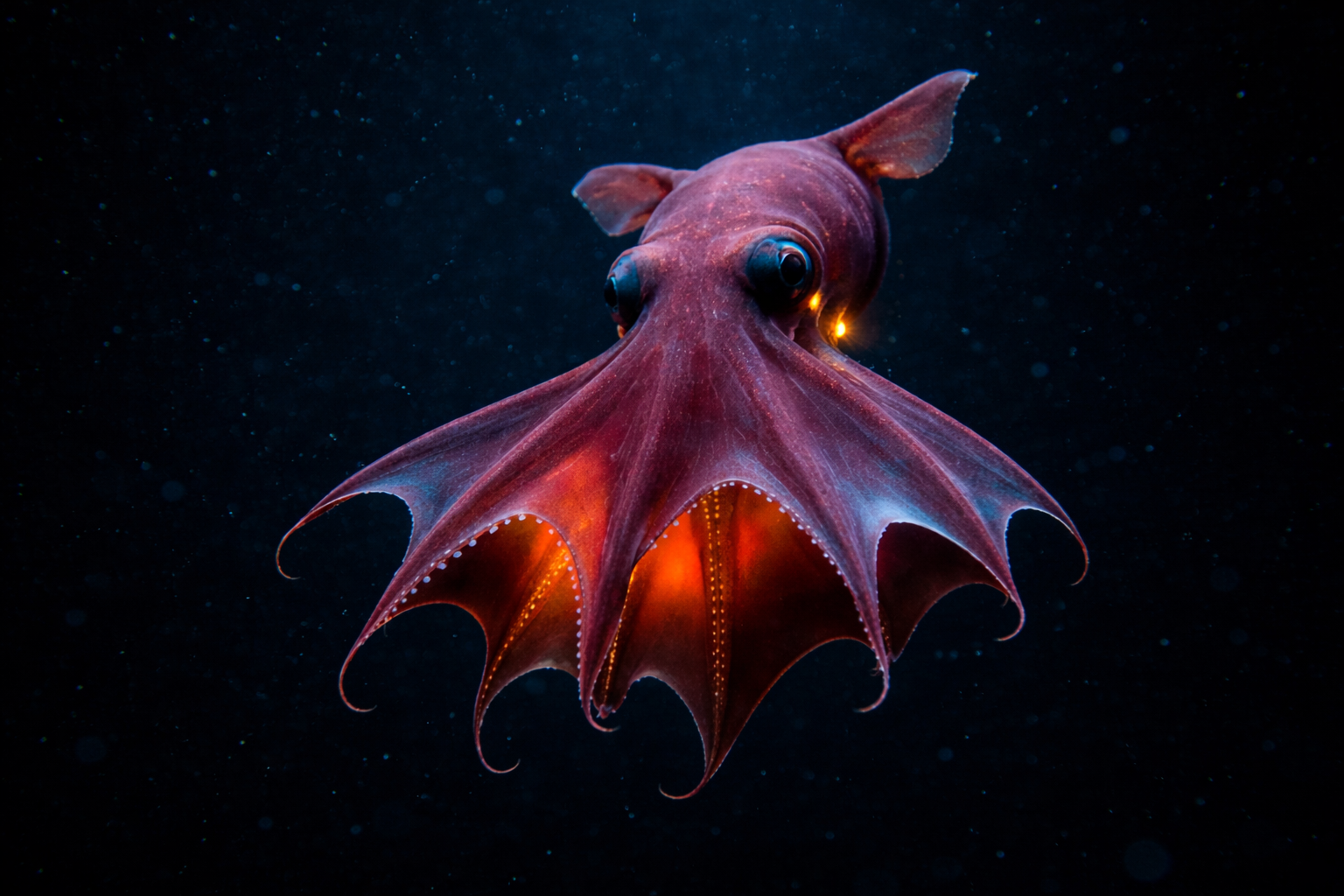
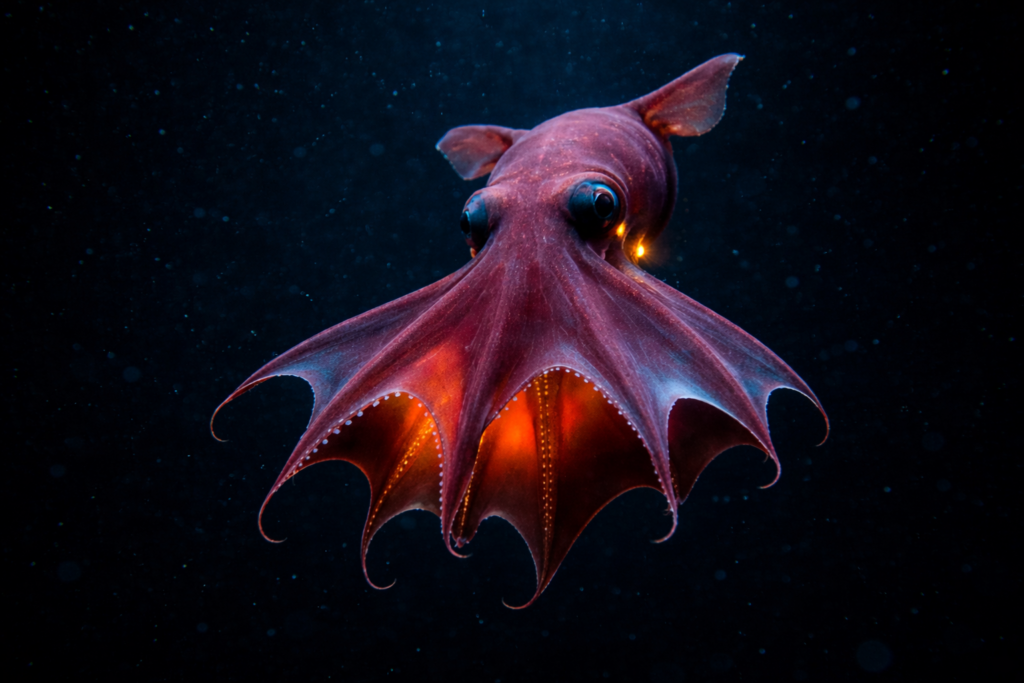
The Vampire Squid (Vampyroteuthis infernalis) is a deep-sea cephalopod that lives in very low-oxygen zones of the ocean. Its name means “vampire squid from hell,” but it is not dangerous to humans. It usually lives at depths of 600 to 900 meters, where sunlight does not reach.
It has a dark red or black body with a cloak-like webbing that connects its arms, giving it a dramatic appearance. When threatened, it can turn itself inside out in a defensive display called the “pineapple posture.” Unlike most squid, it does not hunt large prey. Instead, it feeds on marine snow — tiny particles of dead organic matter drifting down from above.
The vampire squid can produce blue bioluminescent light from special organs on its body. This light helps it confuse predators in the dark ocean. It also has the largest eyes relative to body size of any animal, helping it detect faint light in the deep sea.
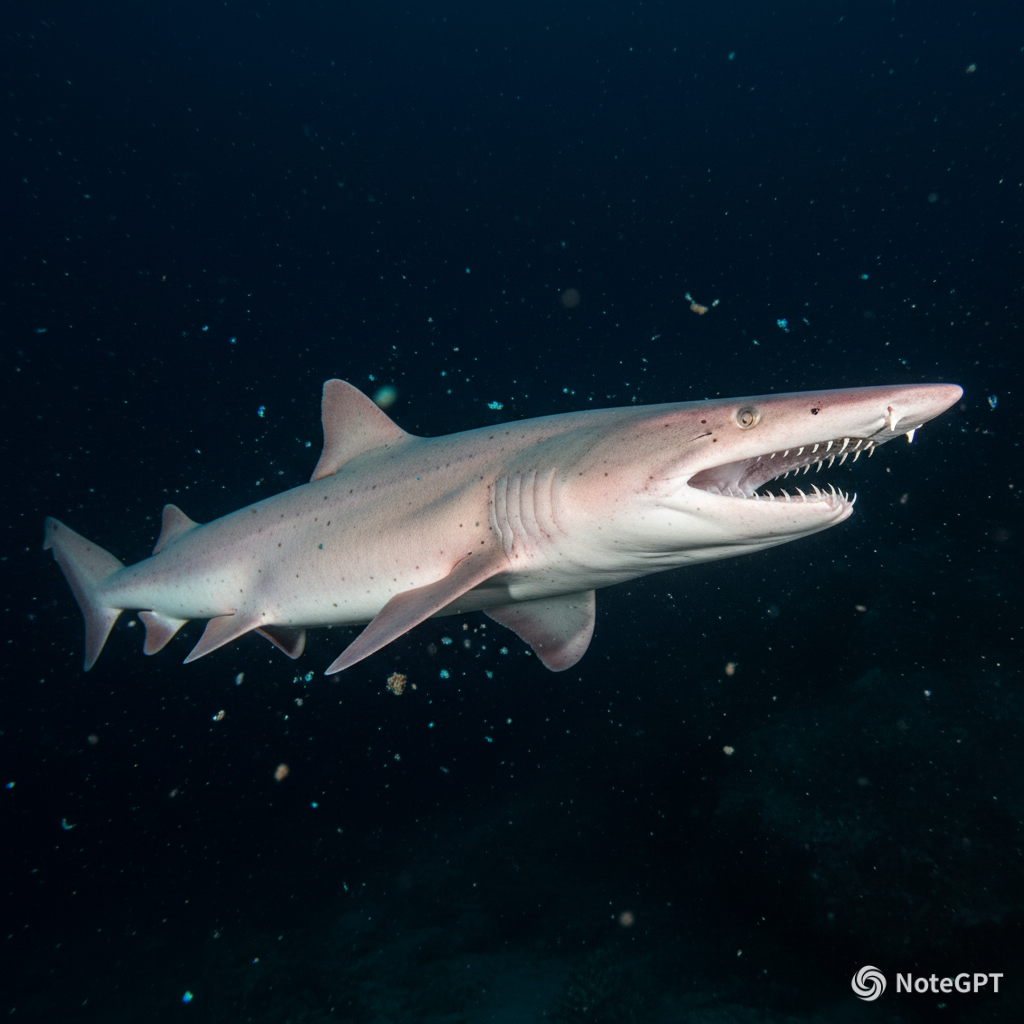
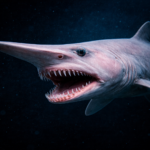
GOBLIN SHARK
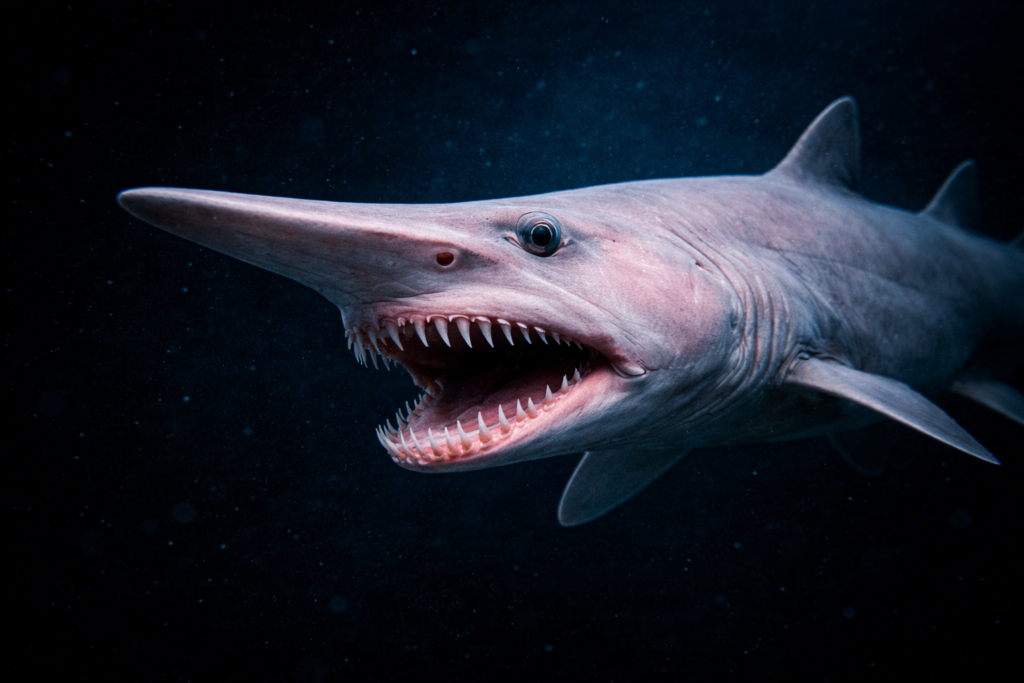
The Goblin shark (Mitsukurina owstoni) is a rare and unusual deep-sea shark often called a “living fossil” because its lineage dates back around 125 million years. It is easily recognized by its long, flat, blade-like snout and protruding jaws filled with sharp, nail-like teeth.
Goblin sharks usually grow between 3 to 4 meters (10–13 feet) in length. Their body is soft and flabby compared to most sharks, and they have a pale pink or grayish color due to visible blood vessels under their skin.
They live in deep ocean waters at depths of about 100 to 1,200 meters (330 to 3,900 feet), far below sunlight. Goblin sharks feed on deep-sea fish, squid, and crustaceans. They use their special ability to quickly extend their jaws forward to catch prey.
Because they live so deep in the ocean, goblin sharks are rarely seen by humans and are not considered dangerous to people.
ACCORDION
IMAGES OF CREATURES.
LEAFY SEA DRAGON
GOBLIN SHARK
VAMPIRE SQUID
YETI CRAB
FRILLED SHARK
BLACK DRAGONFISH
TABS
IMAGE BOX

VAMPIRE SQUID
The Vampire squid is a mysterious deep-sea creature whose name means “vampire squid from hell,” though it is neither a true squid nor an octopus. It lives in the oxygen-minimum zones of the deep ocean at depths of about 600 to 900 meters, where very few animals can survive. Unlike squids, it does not use ink to escape predators; instead, it releases a cloud of glowing bioluminescent mucus to confuse attackers. Its dark red to black body, webbed arms, and large glowing blue eyes give it a dramatic appearance. Rather than hunting live prey, the vampire squid feeds on marine snow—tiny particles of dead plants and animals drifting down from above. With its slow movements and unique ability to survive in low-oxygen environments, the vampire squid is one of the most fascinating and unusual creatures of the deep sea.
ICON BOX
This is the heading
Lorem ipsum dolor sit amet, consectetur adipiscing elit. Ut elit tellus, luctus nec ullamcorper mattis, pulvinar dapibus leo.
IMAGE CAROUSEL


BASIC GALLERY
ICON LIST
- List Item #1
- List Item #2
- List Item #3
COUNTER
PROGRESS BAR
TESTIMONIAL
SOCIAL ICON
ALERT
SOUND CLOUD
SHORT CODE (use code for use forum/form)
HTML CODE
BLACK CANVAS
Minimal animated dark premium website background.